Supportive, not punitive
Encourage returning after a lapse through supportive language and progress cues without public penalties.
A wearable for habit change without shame
Problem
Streaks and hard failure states can make a lapse feel final. People needed support they could return to without judgment.
Approach
Use a wearable ritual, ambient progress, and private check-ins to encourage consistency without punishing setbacks.
Final deliverable
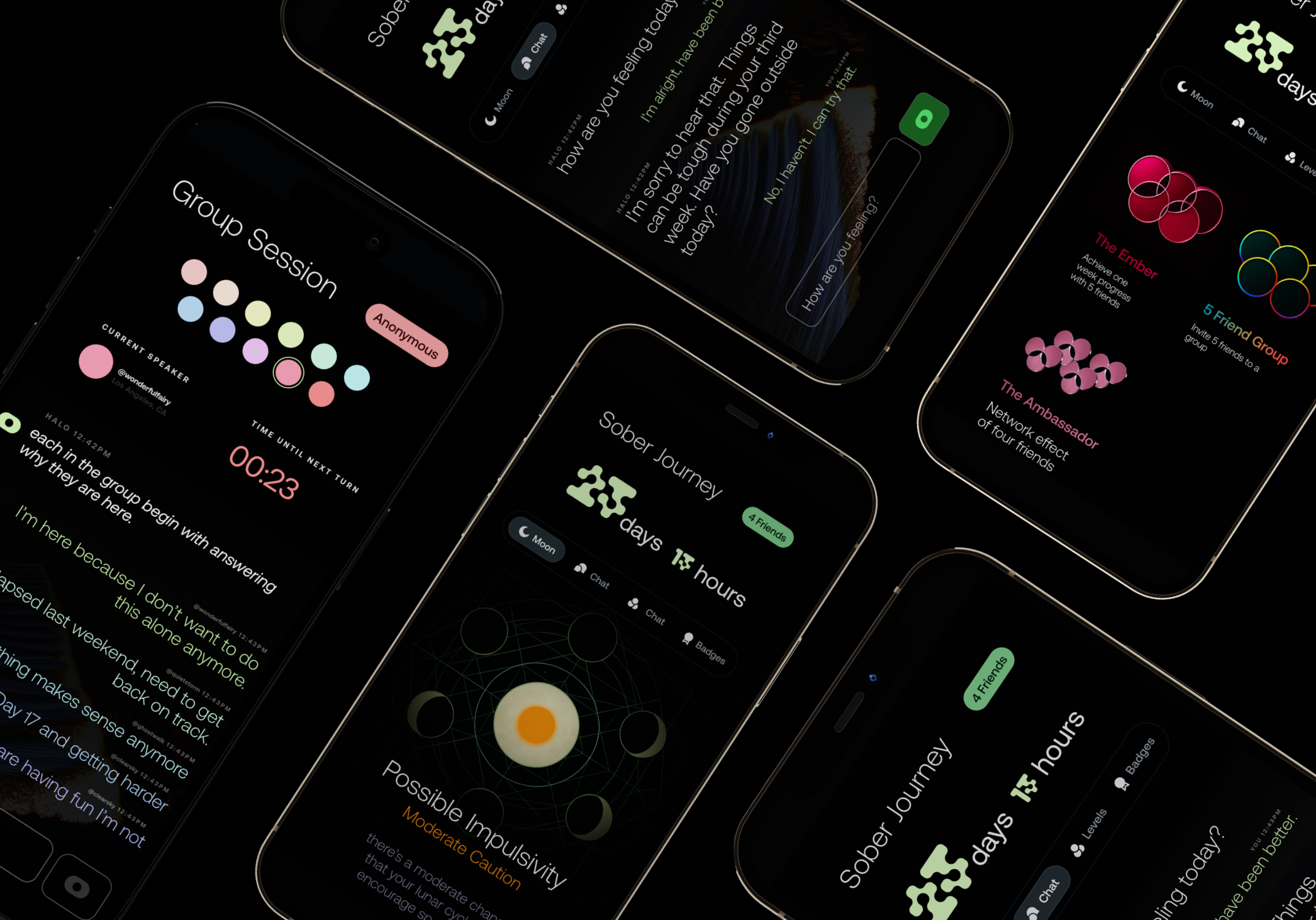
Designed the wearable, app, brand, and prototype, including anonymous support rooms. This remains an exploratory founder concept without production or customer validation.
Product principles
Encourage returning after a lapse through supportive language and progress cues without public penalties.
The wearable and Halo cue one deliberate check-in instead of constant notifications.
Jewelry-like materials and gentle motion make the wearable an object someone would choose to keep close.
Keep time and milestones visible to the individual and trusted peers without public ranking.
Product process
The final direction was not predetermined. I moved from familiar habit-tracking patterns toward a system where the object, interaction, progress model, and social layer reinforced the same emotional goal.
Live Demo
Explore the live concept site and interactive product direction.
Website
Open01
Early streak dashboards put too much emotional weight on one number. A hold gesture and glowing Halo made check-in a deliberate, reassuring action.
02
Themed rooms and anonymous characters test a gentler way to name emotions before joining a social space.
03
The wearable cues intention; the app supports reflection. Private progress, physical milestones, and optional rooms encourage returning.
04
Badges stay personal or within trusted groups. Whether these cues still create performance pressure remains the first behavioral risk to test.
05
Elapsed time, close relationships, and a next step keep progress broader than one day's result.
06
Anonymous sessions use speaker states and turn timers; asynchronous chat keeps support available between sessions.
07
A jewelry-like form and tactile center cue intention without broadcasting what the wearable represents.
08
Monthly stones preserve accumulated effort, even after a lapse. Packaging introduces them as an ongoing ritual.
09
Soft materials, luminous color, and direct language connect the app, wearable, and packaging.
10
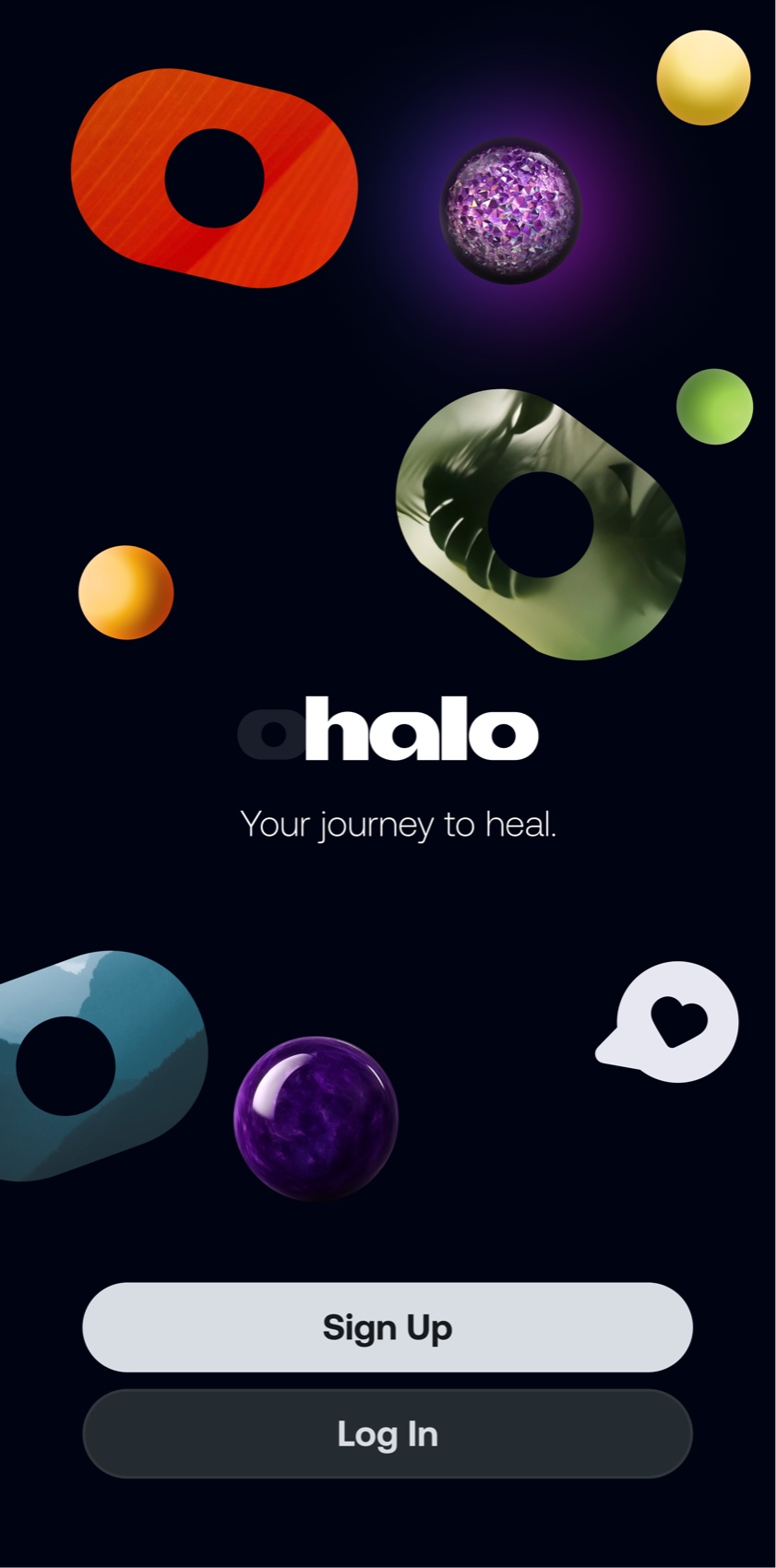
A brand-led entry - “Your journey to heal” - leads into private participation. The Welcome Room explores a turn-based speaking circle where people can join without exposing their identity.
11
The original MVP concept explored anonymous, open, and public rooms, with ongoing chat and sessions. These studies show the social structure that informed the later support experience.
12
Three unboxing concepts, each with its own mantra and material palette - from the light Milestones kit to a dark, grounded box and a warm tan edition.
13
Before the product, a question: who is Halo? A run of personas - the rock star on a bender, the DJ at 2 AM, the starving artist in pain - that resolve into a quieter answer: Halo is a lot like you and me, and it stays.
14
The original deck framed Halo as a design-first, emotionally grounded support network for sobriety and mental wellness. These slides preserve that ambition; they are concept positioning, not validated health outcomes.
Reflection
The strongest part of Habit Halo is not a single screen or render. It is the coherence between the wearable, the check-in gesture, the progress model, the social boundaries, and the brand. Each decision supports the same promise: help someone return without making them feel watched or judged.
Run a longitudinal prototype study to learn whether the hold gesture and ambient feedback still feel supportive after weeks, including after a missed day.
Compare the current model with reduced-streak alternatives to see whether people understand momentum without treating continuity as a pass-or-fail score.
Learn whether the wearable creates meaningful ritual, and which anonymous or trusted-group interactions feel helpful rather than intrusive.
Habit Halo is an exploratory founder concept. It has not been validated through production usage, customer metrics, or longitudinal research; these tests define the next product phase.